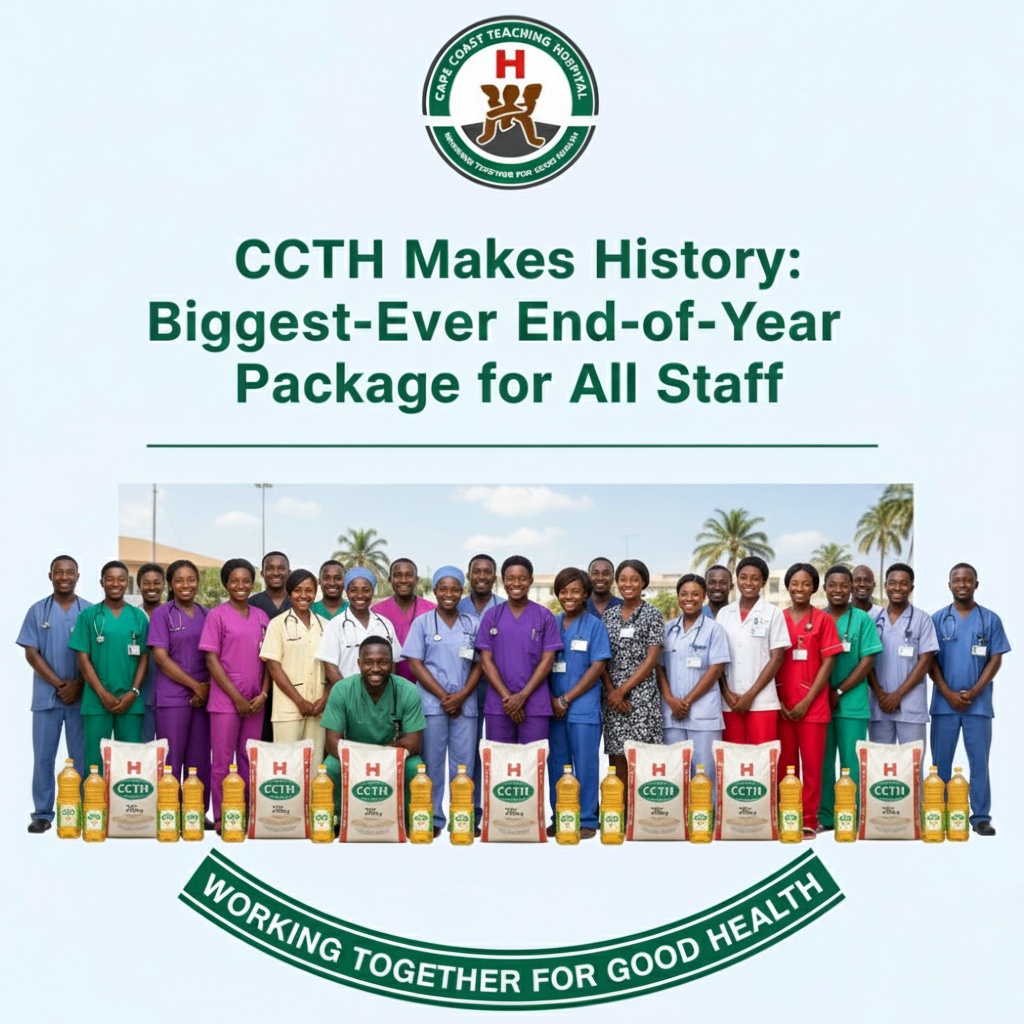
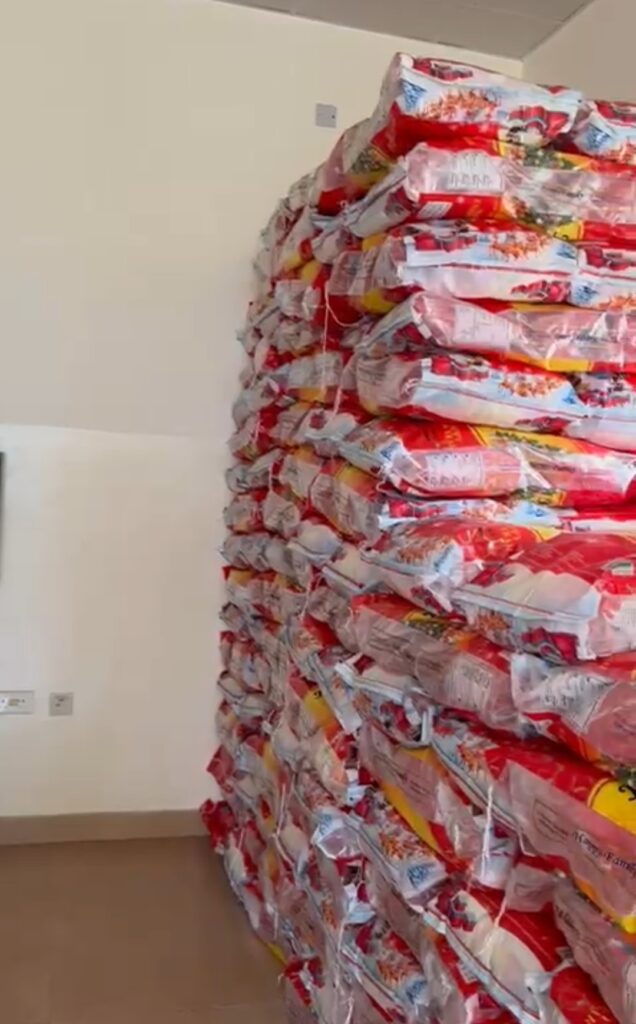
For the first time in the history of the Cape Coast Teaching Hospital (CCTH), every staff member is receiving an end-of-year package consisting of a 25kg bag of rice and 2 litres of cooking oil. This is not a routine gesture, and it should not be treated as one. It marks a clear departure from the past and signals a deliberate attempt to recognise the human effort that keeps the hospital functional under difficult conditions.
Healthcare workers at CCTH have endured years of pressure—high patient load, limited logistics, staff shortages, and the emotional weight of clinical decision-making. Despite these realities, staff commitment has remained largely uncompensated beyond salaries. The introduction of this end-of-year package therefore carries symbolic and practical significance. Symbolically, it acknowledges that staff welfare matters. Practically, it offers tangible support at a time when household expenses typically increase.
What makes this initiative particularly noteworthy is its inclusiveness. The package is for every staff member, cutting across clinical, administrative, technical, and support units. This approach avoids the divisive “select few” model that often undermines morale in public institutions. It reinforces the idea that hospital outcomes are the product of collective effort, not just frontline visibility.
It must be stated clearly: this has never happened before at CCTH. That fact alone explains the strong reactions it has generated. For some, it represents overdue recognition. For others, it raises expectations for consistency and sustainability. Both responses are valid. A one-time package, while commendable, should not become a substitute for long-term staff welfare policies.
Credit is due to the leadership and stakeholders who made this possible. However, the real value of this initiative will be measured by what follows. Will it become an annual practice? Will it evolve into broader welfare interventions? Or will it remain a symbolic exception?
As the year ends, this gesture stands as a reminder that institutional culture can change. When staff feel seen and valued, even in simple but concrete ways, it strengthens loyalty, morale, and ultimately patient care. The CCTH end-of-year package is not just about rice and oil; it is about recognition. And for a workforce that has waited years for such acknowledgment, that recognition matters.
Kudos to management for this initiative and we pray for its sustainability.
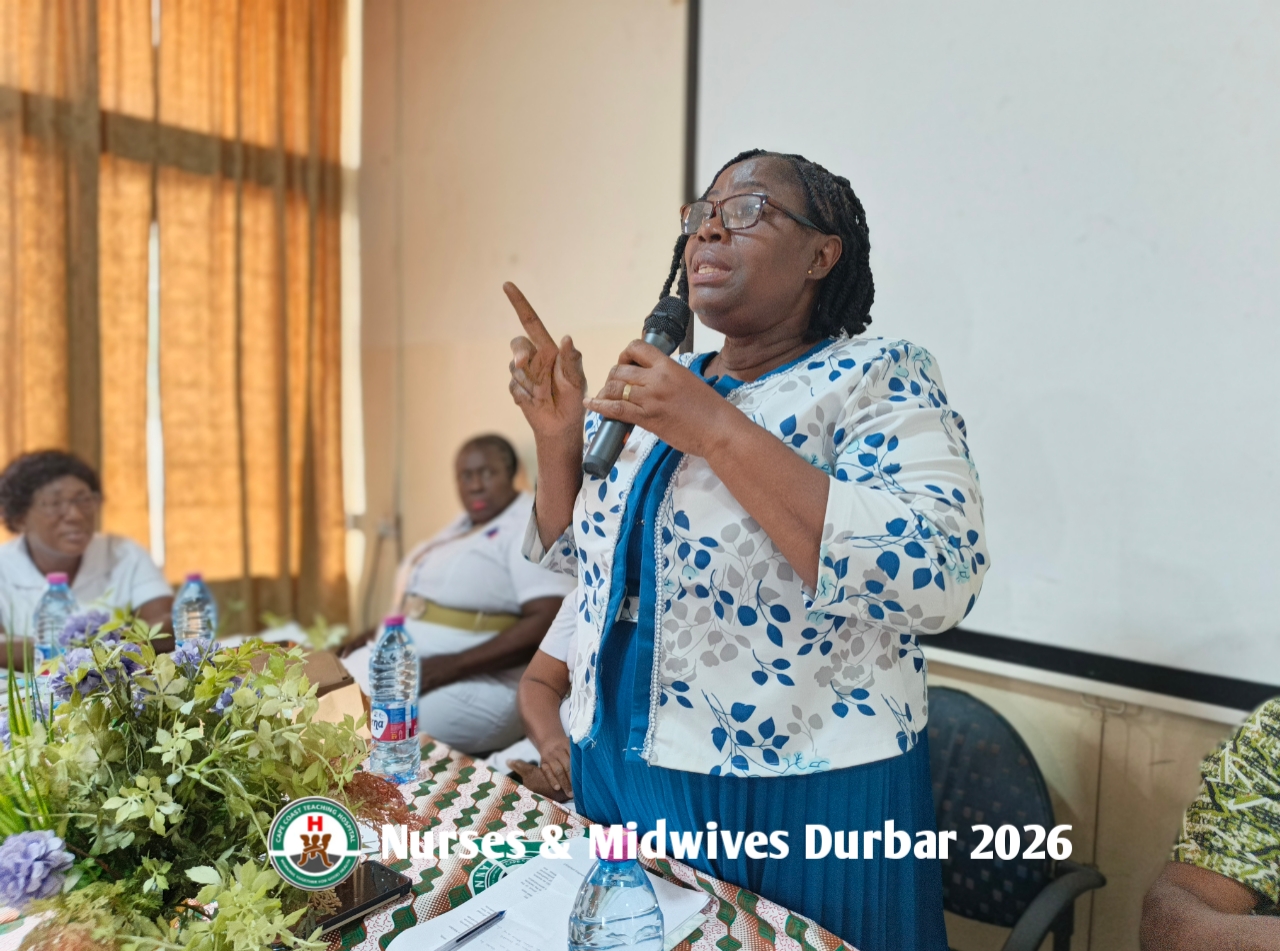


Wow, what a huge difference a year can make! 🎉 Sounds like there’s been a major turnaround at CCTH. The management’s efforts seem to have really paid off, and everyone’s loving the positive vibes 😊. Kudos to them for listening and making changes 👍. Hope this harmony continues!
A change we have been waiting for. Let’s pray for sustainability. Kudos to the CCTH Board as well as management. We are very grateful and we expect more to come next year