

Health Innovation Trends: Enhancing Care, Technology, and Patient Outcomes
GLOBAL HEALTH SPACE >> Innovation>> Health Innovation Trends: Enhancing Care, Technology, and Patient Outcomes
Health Innovation Trends: Enhancing Care, Technology, and Patient Outcomes
Can we deliver safer, faster, and more equitable healthcare while costs keep rising and workforces are strained? Health innovation is making that possible. From AI-driven diagnostics to precision medicine, from virtual care to hospital-at-home models, the healthcare industry is undergoing a fundamental transformation. In this comprehensive guide, you’ll learn what health innovation means today, which technologies are reshaping care, how organizations can implement and scale solutions, and what patients, clinicians, and leaders should watch next. We’ll also explore regulatory shifts, ethical considerations, real-world case studies, and practical steps to get started. Whether you’re a clinician, health tech founder, payer, or policy expert, this article provides an authoritative, actionable roadmap to navigate the fast-evolving landscape of healthcare innovation.

Source: entrepreneurs.utoronto.ca
What Is Health Innovation? A Practical Definition
Health innovation refers to new ideas, technologies, processes, and policies that improve health outcomes, patient experience, clinical workflows, equity, and affordability. It spans prevention, diagnosis, treatment, monitoring, and population health management. Crucially, innovation is not only about cutting-edge tech; it’s about adoption at scale, safety, and measurable impact.
-
-
-
- Core dimensions: clinical efficacy, patient safety, cost-effectiveness, equity, scalability, and interoperability
- Scope: digital health, biotech, medical devices, data infrastructure, payment models, care delivery redesign, and workforce enablement
- Success metric: measurable improvement in outcomes (e.g., readmissions, adherence, access) with sustainable ROI
-
-
Key takeaway: Health innovation is only meaningful when it’s implementable, ethical, and demonstrably improves health for diverse populations.

-
-
- Source:
-
Top Health Innovation Topics to Watch in 2025 and Beyond

1) Artificial Intelligence in Healthcare: From Hype to High-Value Use Cases
AI in healthcare has matured from pilots to production, especially in imaging, documentation, and triage. Generative AI and machine learning are reshaping workflows and decision support.
- Clinical documentation and ambient scribing: AI tools capture and summarize clinical encounters, reducing clinician burnout and improving note quality.
- Imaging and diagnostics: FDA-cleared algorithms assist in radiology, cardiology, ophthalmology, and dermatology for faster detection with high sensitivity.
- Operational optimization: Predictive analytics for bed capacity, staffing, and ED throughput lowers costs and delays.
- Care navigation and triage: AI chatbots and symptom checkers route patients to the right care setting while enhancing access.
Implementation tips: Start with bounded workflows, ensure human-in-the-loop oversight, maintain data lineage, and measure bias and model drift. Align with regulatory guidance (e.g., Good Machine Learning Practice principles, algorithm change control, and transparency requirements).

Source: www.himssconference.com
2) Telehealth, Virtual-First Care, and Hybrid Models
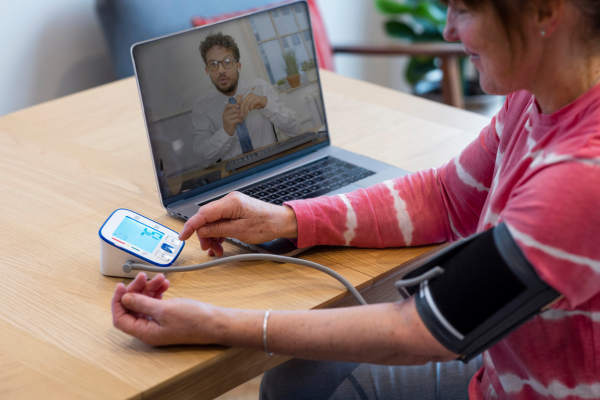
Telehealth evolved from pandemic necessity to durable infrastructure. Hybrid models that blend in-person and virtual care are now standard in behavioral health, chronic disease management, and post-acute care.
- Virtual-first plans: Payers increasingly offer plans where telehealth is the entry point for primary and behavioral care.
- Continuous virtual care: Remote follow-up reduces readmissions and improves medication adherence.
- Behavioral health: Teletherapy and collaborative care models expand access amid clinician shortages.
Best practice: Integrate telehealth scheduling, EHR documentation, and billing. Use clear clinical triage protocols to determine virtual appropriateness.
Source: www.one80.com
3) Remote Patient Monitoring (RPM) and Hospital-at-Home
Connected devices and home-based care have become mainstream for conditions like hypertension, heart failure, COPD, and diabetes.
- RPM benefits: Earlier intervention, reduced ED visits, improved control of risk factors, and better patient satisfaction.
- Hospital-at-home: Acute-level care with daily clinician oversight and remote monitoring can reduce complications and costs while maintaining safety.
What to measure: Alert-to-action time, adherence to device use, patient-reported outcomes, and escalation rates.
4) Precision Medicine and Genomics
Precision medicine tailors treatments to a person’s genetic, environmental, and lifestyle factors.
- Pharmacogenomics: Matching medications to gene variants reduces adverse drug events and improves efficacy.
- Oncology: Tumor sequencing informs targeted therapies and immunotherapies; liquid biopsies enable minimal residual disease monitoring.
- Rare diseases: Faster diagnosis via whole-exome or whole-genome sequencing is transforming care pathways.
Integration tip: Provide decision support inside the EHR to surface relevant variants at the prescribing moment and ensure genetic counseling access.
5) Value-Based Care and Alternative Payment Models
Payment reform is catalyzing innovation. Value-based care (VBC) aligns incentives with outcomes rather than volume.
- Accountable care: Shared savings encourage prevention and chronic disease control.
- Condition-based bundles: Episode payments for procedures (e.g., joint replacement) drive care standardization and post-acute planning.
- Primary care enablement: Risk-bearing models fund care teams, RPM, and social services coordination.
Strategy: Build data infrastructure for risk stratification, clinical pathways, and quality reporting. Tie innovation pilots to VBC metrics.
6) Interoperability, FHIR APIs, and Health Data Liquidity
Data interoperability is the backbone of digital transformation. Modern standards like FHIR enable secure data exchange, patient access, and app ecosystems.
- Use cases: Cross-system care coordination, patient-mediated data sharing, and digital apps integrated with EHR workflows.
- Governance: Enforce data quality, privacy, and consent management. Monitor API performance and security posture.
Outcome: Better data liquidity reduces duplication, improves safety, and accelerates innovation.
7) Cybersecurity and Resilience in Healthcare
Healthcare systems remain prime targets for cyberattacks. Innovation must be paired with robust security.
- Zero trust architectures: Authenticate, authorize, and continuously verify access.
- Ransomware readiness: Immutable backups, incident response playbooks, tabletop exercises, and network segmentation.
- Medical device security: SBOMs, firmware updates, and coordinated vulnerability disclosure programs.
KPIs: Mean time to detect/respond, patch cadence, phishing resilience, and third-party risk assessments.
8) Behavioral Health Innovation
Rising demand and clinician shortages drive innovation across screening, access, and integrated care.
- Integrated primary care models: Collaborative care leverages measurement-based care and behavioral care managers.
- Digital therapeutics: Evidence-based software for conditions like insomnia or anxiety can complement therapy and medications.
- Peer support and group models: Virtual group therapy expands reach and reduces stigma.
Equity focus: Multilingual services, culturally responsive care, and trauma-informed approaches improve engagement.
9) Digital Therapeutics and Software as a Medical Device (SaMD)
Regulated software is delivering clinical interventions for conditions including diabetes, addiction, and chronic pain.
- Clinical validation: Randomized controlled trials, real-world evidence, and adherence data.
- Commercial models: Employer benefits, payer coverage, and provider-prescribed pathways.
Adoption advice: Ensure EHR integration, straightforward onboarding, and clear care team workflows.
10) Social Determinants of Health (SDOH) and Community-Based Care
Addressing housing, food, transportation, and social support can significantly influence outcomes.
- Screen-and-refer: Embed SDOH screening and connect patients to community resources via closed-loop referrals.
- Funding models: Value-based contracts and Medicaid waivers increasingly support non-clinical interventions.
Measure what matters: Track resource uptake, time-to-service, and outcome improvements tied to social support.
11) Women’s Health and FemTech
FemTech is accelerating innovation in reproductive health, menopause, pelvic floor disorders, and maternal care.
- Maternal health: Remote monitoring for hypertension and diabetes reduces severe adverse events.
- Menopause care: Virtual clinics and personalized plans address symptoms and long-term risks like osteoporosis.
Equity lens: Target disparities in maternal morbidity with culturally competent care and doula support.
12) Wearables, Sensors, and Continuous Health
Consumer and clinical-grade wearables enable continuous, passive monitoring for early detection and prevention.
- Cardiometabolic monitoring: Heart rhythm, sleep, activity, and glucose trends support coaching and interventions.
- Validated endpoints: Move from wellness to medical-grade metrics through rigorous validation.
Integration note: Establish data triage rules, thresholds, and escalation workflows to avoid alert fatigue.
13) Care Navigation Platforms and Patient Engagement
Patients increasingly expect consumer-grade experiences—simple navigation, transparent costs, and proactive outreach.
- Personalized journeys: Evidence-based reminders, education, and goal-setting improve adherence.
- Cost transparency: Price estimates and benefits navigation build trust and reduce surprise billing.
Design principle: Use plain language, multilingual content, and mobile-first experiences.
14) Data Science, Real-World Evidence (RWE), and Learning Health Systems
Health systems are turning routine care data into continuous learning loops that improve outcomes and reduce variation.
- RWE in pharma and devices: Supports label expansions, safety monitoring, and coverage decisions.
- Quality improvement: Rapid-cycle analytics drive adherence to clinical pathways.
Governance: Ethics review, de-identification, bias assessment, and patient representation in data decisions.
15) Workforce Innovation and Clinical Burnout Reduction
Innovations that don’t help clinicians will fail. Successful organizations prioritize workforce wellbeing and efficiency.
- Automation: Prior authorization, scheduling, and revenue cycle automation reduce administrative burden.
- Team-based care: Expanded roles for pharmacists, nurses, scribes, and community health workers.
- Training: Microlearning, simulation, and change management embedded in rollouts.
Regulatory Landscape Shaping Health Innovation
Regulatory clarity is essential to scale safely. While details vary by jurisdiction, innovators should monitor:
- Software/AI regulation: Classification, clinical evaluation requirements, post-market surveillance, and transparency for adaptive algorithms.
- Data privacy and security: Consent, data minimization, patient access rights, and breach notification requirements.
- Reimbursement: Coverage and payment policies for telehealth, RPM, digital therapeutics, and value-based contracts.
- Interoperability rules: API standards, information blocking enforcement, and patient data portability.
Action: Engage compliance early, document clinical evidence, and create audit-ready processes.
Ethics and Equity: Innovating Responsibly
Ethical design and equity are not optional—they drive adoption and impact.
- Bias mitigation: Use diverse datasets, fairness metrics, and human oversight.
- Accessibility: Inclusive design, low-bandwidth options, and multi-language support.
- Transparency: Explainable models and clear patient communication.
- Trust: Clinician champions, patient advisory councils, and participatory design.
Quote: “Equity is a design choice—and a performance metric.”
Case Studies: Health Innovation in Action
Case Study 1: AI Ambient Scribing in Primary Care
- Challenge: Clinician burnout due to documentation burden.
- Solution: Ambient AI scribe integrated with EHR, human-in-the-loop quality review.
- Results: 40–60% reduction in after-hours charting, improved note completeness, higher clinician satisfaction.
- Lessons: Provide opt-out, monitor error types, and train on privacy protocols.
Case Study 2: Remote Cardiac Monitoring for Heart Failure
- Challenge: Frequent readmissions and delayed symptom recognition.
- Solution: Connected scales and BP cuffs, daily symptom surveys, nurse-led escalation.
- Results: Reduced 30-day readmissions, improved medication titration, strong patient engagement.
- Lessons: Prioritize device usability, cellular connectivity for low-tech patients, and closed-loop alerts.
Case Study 3: Integrated Behavioral Health via Telehealth
- Challenge: Long wait times for therapy and fragmented care.
- Solution: Collaborative care model with virtual visits, measurement-based care, and PCP integration.
- Results: Faster access, improved PHQ-9 scores, decreased ED utilization for mental health crises.
- Lessons: Embed care managers in primary care teams and standardize outcome tracking.
Implementing Health Innovation: A Step-by-Step Playbook
1) Define the Problem and Success Metrics
- Align stakeholders on the clinical and operational pain points.
- Set SMART goals: outcomes, experience, equity, and financial metrics.
2) Build the Business Case
- Quantify ROI: cost avoidance, revenue impact, quality incentives.
- Map reimbursement pathways and value-based incentives.
3) Select and Validate Solutions
- Assess clinical evidence, regulatory status, security posture, and interoperability.
- Run small, well-designed pilots with control groups and pre-post analysis.
4) Design for Workflow and Adoption
- Co-create with frontline clinicians and patients.
- Integrate into EHR, scheduling, and billing to minimize friction.
5) Govern Data and Risk
- Establish data governance, privacy, and model monitoring.
- Define escalation and incident response protocols.
6) Train, Launch, and Iterate
- Deliver role-based training and quick reference guides.
- Monitor KPIs and iterate fast based on feedback and outcomes.
7) Scale and Sustain
- Standardize playbooks, expand to new sites or populations.
- Continuously evaluate ROI and clinical impact.
Metrics That Matter for Health Innovation Success
- Clinical outcomes: readmissions, ED visits, control rates (A1c, BP), time-to-diagnosis.
- Experience: patient satisfaction, clinician Net Promoter Score, access time.
- Operational: throughput, LOS, no-show rates, documentation time.
- Financial: cost per episode, total cost of care, shared savings, reimbursement capture.
- Equity: utilization across demographics, digital access gaps, language support uptake.
- Safety and quality: alert