

Are you a Ghanaian-trained nurse dreaming of working in Australia? You’re not alone. Australia’s world-class healthcare system, competitive salaries, and strong demand for nurses make it an attractive destination for internationally qualified nurses (IQNs). However, the process can feel complex without the right roadmap.
In this comprehensive, step-by-step guide, you’ll learn exactly how to become a nurse in Australia as a Ghanaian-trained nurse—from meeting the Nursing and Midwifery Board of Australia’s (NMBA) registration standards to choosing the right bridging pathways, passing the OBA exams, securing a visa, and landing your first job. You’ll also find timelines, costs, documentation checklists, and practical tips tailored to nurses trained in Ghana.
By the end of this article, you will know:
-
-
-
- How the NMBA/AHPRA registration process works for Ghanaian nurses
- Which assessment pathway you’ll follow and what documents you need
- How to prepare for OET/IELTS and the OBA (NCLEX-RN + OSCE) pathway
- Visa options, job search strategies, and relocation tips
- Estimated costs, timeline, and common mistakes to avoid
-
-

Source: www.facebook.com
Understanding the Australian Nursing Landscape

Source: www.health.gov.au
Regulator and Registration Categories
In Australia, the profession is regulated by the Nursing and Midwifery Board of Australia (NMBA) and administered by the Australian Health Practitioner Regulation Agency (AHPRA). As a Ghanaian-trained nurse, you’ll apply as an internationally qualified nurse (IQN) for one of the following divisions:
- Registered Nurse (RN): Bachelor-level qualification; broader scope of practice; eligible for the Outcome-Based Assessment (OBA) pathway.
- Enrolled Nurse (EN): Diploma-level qualification; works under RN supervision. Some IQNs may be assessed as ENs depending on qualification comparability.
- Midwife: Requires a dedicated midwifery program. If you trained as a general nurse and midwife in Ghana, you may pursue dual registration, subject to assessment.
Key takeaway: Your Ghanaian degree and transcripts will determine whether you’re assessed toward RN or EN. Most degree-qualified Ghanaian nurses aim for RN registration via the OBA pathway introduced by NMBA.

Source: www.facebook.com
Eligibility Snapshot: Can Ghanaian Nurses Register in Australia?
Yes—Ghanaian-trained nurses can register in Australia if they meet NMBA’s registration standards and successfully complete the required assessments. The core standards include:
- Criminal history check
- English language proficiency
- Recency of practice (generally at least 450 hours in the last 5 years)
- Continuing professional development (CPD) (not always required before initial registration but helpful if recently practicing)
- Professional indemnity insurance (PII) (usually secured upon employment)
Note: The NMBA uses a model that compares your education, scope, and clinical hours against Australian standards. If gaps exist, you’ll be directed to complete the OBA pathway (the most common for Ghanaian RNs).
Step-by-Step Process: How to Become a Nurse in Australia (Ghana-Trained)
Step 1: Verify Your Identity and Qualifications via CGFNS (EPIC/International Services)
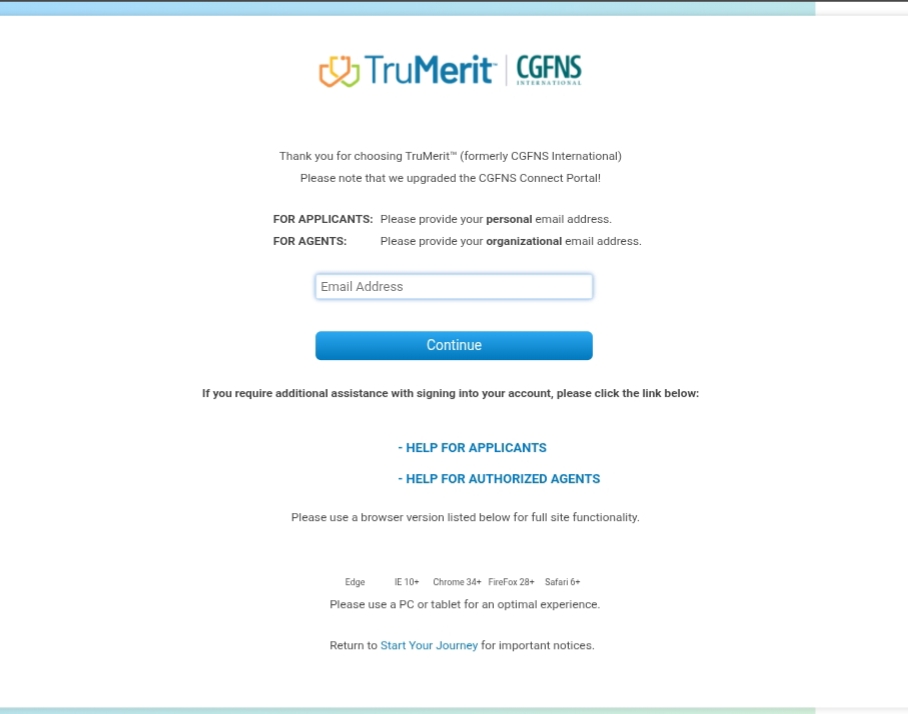
Before AHPRA can assess your application, you must submit your credentials for verification through the NMBA-approved verification service. As of 2025, this is typically conducted via CGFNS International under the NMBA-approved program for IQNs (formerly candidates used EPIC). The service verifies your:
- Primary nursing qualification (e.g., BSc Nursing)
- Transcript and clinical breakdown
- License/registration from the Nursing and Midwifery Council (N&MC), Ghana
- Identity documents (passport, birth certificate)
Action: Create a CGFNS account and follow the NMBA/IQN pathway instructions. Request your university and the N&MC Ghana to send documents directly to CGFNS for primary-source verification.
Step 2: Meet English Language Requirements
The NMBA requires evidence of English proficiency. Accepted tests and thresholds commonly include:
- OET (Nursing): Minimum B grade in each sub-test (Listening, Reading, Writing, Speaking)
- IELTS Academic: Minimum overall 7.0 with at least 7.0 in Listening, Reading, and Speaking, and 7.0 in Writing (check the latest NMBA specifics)
- PTE Academic: Typically an overall 65 with minimum scores per band equivalent to IELTS 7 (verify current NMBA table)
Tip: OET Nursing is tailored to healthcare scenarios and is popular among nurses. Scores are valid for 2 years for registration purposes.
Step 3: Submit Your AHPRA Application
After verification and English test results, lodge an application to AHPRA via the NMBA IQN pathway. You’ll provide:
- CGFNS report reference
- Proof of identity
- Education and employment history
- English test results
- Declarations (health, conduct, criminal history)
AHPRA will assess your qualification comparability against Australian standards. Most Ghanaian bachelor-qualified nurses are directed to complete the Outcome-Based Assessment (OBA) for RNs.
Step 4: Follow the OBA Pathway (For RN Applicants)
The OBA pathway comprises two assessments:
- NCLEX-RN (Computer-based knowledge exam): Tests nursing theory, clinical judgement, and safe practice.
- OSCE (Objective Structured Clinical Examination): Hands-on, station-based clinical skills assessment conducted in Australia.
Sequence: You must first pass NCLEX-RN. After passing, you’ll receive eligibility to book the OSCE at an NMBA-approved test center in Australia.
Step 5: Complete Any Additional Requirements
Following successful OBA, AHPRA finalizes your registration subject to:
- Criminal history check (international and Australian once you arrive)
- Recency of practice evidence
- Statements on health impairment and professional conduct
Once approved, you’ll receive your Australian RN registration and can commence practice.
Documents Checklist for Ghanaian-Trained Nurses
Prepare these early to avoid delays:
- Valid passport
- Birth certificate
- Nursing degree certificate (BSc Nursing or equivalent)
- Academic transcript with clinical hours breakdown
- Verification of registration from N&MC Ghana
- Police clearance certificate (Ghana; and any other countries of residence)
- Curriculum vitae/resume (AHPRA format)
- Employment references, job descriptions, payslips (if available)
- English test results (OET/IELTS/PTE)
- Passport-sized photographs meeting AHPRA standards
Pro tip: Keep certified copies of all documents. Use the same name across documents; if different, include an affidavit or name change certificate.
Understanding the Outcome-Based Assessment (OBA) Pathway
NCLEX-RN for Australia
The NMBA adopted the NCLEX-RN to test theoretical knowledge. You’ll sit the exam via Pearson VUE test centers (available internationally, including in some African hubs). The exam is adaptive, timed, and covers:
- Safe and effective care environment
- Health promotion and maintenance
- Psychosocial integrity
- Physiological integrity
Study resources: Saunders Comprehensive Review, UWorld, Archer Review, LaCharity Prioritization & Delegation, NCLEX-style question banks, and OBA-focused prep providers.
OSCE in Australia
The OSCE assesses your hands-on skills, communication, clinical reasoning, and adherence to Australian standards (infection prevention, medication safety, documentation). Expect stations such as:
- Patient assessment and prioritization
- Medication administration and calculations
- Wound care and aseptic technique
- IV therapy and device management
- Clinical handover using ISBAR
- Cultural safety and patient education
Training: Many candidates attend OSCE preparation courses in Australia. While optional, structured practice can dramatically improve pass rates.
Pathway Variations: EN Registration or Bridging Programs
While the OBA is the primary route for RNs, some applicants may be assessed as more comparable to Enrolled Nurse (EN). ENs also have an OBA model or may need additional assessments. Applicants with limited recency of practice or significant gaps might consider:
- Australian graduate-entry programs (for those willing to re-qualify)
- EN pathway as a step toward later upgrading to RN via further study in Australia
Note: Legacy bridging programs (IRON) have been phased out and replaced by the OBA model in most cases. Always check NMBA updates for current options.
Timeline and Cost Estimate (Typical)
- CGFNS verification: 2–4 months (variable based on document responsiveness). Cost: approximately USD 400–700+ depending on services.
- English test (OET/IELTS/PTE): 1–3 months prep. Cost: USD 200–500 per attempt.
- AHPRA application fee: AUD 600–1,000+ (varies by division and year; check current fees).
- NCLEX-RN registration + exam: USD 200–350 + international scheduling fees.
- OSCE: AUD 3,000–4,500+ (exam fee only; prep courses extra).
- Travel and accommodation for OSCE in Australia: AUD 2,000–5,000+ depending on location and duration.
- Visa, medicals, police checks, insurance: AUD 1,000–3,000+ depending on visa type.
Total range: AUD 7,000–15,000+ from start to finish, excluding opportunity costs. Overall timeline can be 9–18 months.
Visa Options for Ghanaian Nurses
Once you pass OBA and get AHPRA registration (or have employer sponsorship pending registration), you’ll need the right visa to live and work in Australia. Consult the Department of Home Affairs for the latest details. Common pathways include:
Employer-Sponsored Visas
- Subclass 482 (Temporary Skill Shortage): Employer sponsorship; requires skills assessment or AHPRA registration, English, and labor market testing by employer.
- Subclass 186 (Employer Nomination Scheme): Permanent residency via employer nomination; eligibility varies by stream.
Skilled Migration (Points-Based)
- Subclass 189 (Skilled Independent): Points-tested PR; no sponsorship; occupation must be on the Skilled Occupation List.
- Subclass 190 (Skilled Nominated): State nomination adds points; commitment to work in nominating state.
- Subclass 491 (Skilled Work Regional Provisional): Regional pathways with state/territory nomination or family sponsorship.
Student and Training Pathways
- Subclass 500 (Student): For those undertaking Australian nursing programs or OSCE prep courses (course-dependent).
- Subclass 407 (Training): For workplace-based training; limited contexts.
Critical: Always verify current visa rules, skills assessment needs, and English/age thresholds on Home Affairs’ website or use a registered migration agent (MARN) for advice.
Job Market Overview: Where Ghanaian Nurses Are in Demand
Australia is experiencing ongoing nurse shortages, especially in:
- Public hospitals and regional health services
- Aged care facilities and community health
- Mental health, perioperative, emergency, and critical care
- Rural and remote areas (often offer relocation incentives)
Salary snapshot (indicative only): RN base salaries typically range from AUD 70,000–95,000+, depending on state, experience, penalties, and allowances. Overtime and shift loadings can add significantly.
How to Secure Your First Nursing Job in Australia
Build an Australian-Ready CV and Cover Letter
- Use Australian terminology (e.g., “clinical handover,” “scope of practice,” “ACFI/AN-ACC” for aged care).
- Highlight OET/IELTS scores, NCLEX pass, OSCE pass, and AHPRA registration number once obtained.
- Include quantified achievements: “Managed 6–8 patient load on medical-surgical ward, reduced medication errors by 20% through double-check protocol.”
Target Employers Strategically
- State health job portals (NSW Health, Queensland Health, SA Health, etc.).
- Large private providers (Ramsay Health Care, Healthscope, St John of God Health Care).
- Aged care providers (Bupa Aged Care, Regis, Estia, Bolton Clarke).
- Regional and rural hospitals with sponsorship options.
Nail Your Interviews
- Prepare scenario-based answers using the STAR method.
- Demonstrate knowledge of Australian standards: NSQHS standards, infection prevention, medication safety, documentation requirements, mandatory reporting.
- Emphasize cultural safety, teamwork, and patient-centered care.
Soft CTA: Consider subscribing to a newsletter focused on Australian healthcare jobs to receive weekly openings and interview tips.
English Test Prep Tips for Ghanaian Nurses
- Choose OET if clinical language is your strength: Practice role-plays and writing referral letters.
- For IELTS Academic: Focus on writing Task 2 essays, coherence, and paraphrasing; use Cambridge resources.
- Build consistency: Aim for 2–3 hours/day for 6–8 weeks with mock tests each weekend.
- Join study groups: Accountability accelerates progress.
Quotable insight: “Treat English proficiency like a clinical competency—plan, practice, get feedback, and simulate the real test.”
NCLEX-RN and OSCE Preparation Strategy
NCLEX Study Plan (10–12 Weeks)
- Assess baseline with 75–100 practice questions/day.
- Use one primary Q-bank (UWorld or Archer) and a secondary for reinforcement.
- Weekly content refresh with Saunders or Rapid Review notes.
- Focus on priority, delegation, and SATA (select-all-that-apply) items.
- Take full-length computer adaptive tests (CAT) near exam time.
OSCE Preparation (4–8 Weeks)
- Attend a reputable OSCE workshop in Australia if possible.
- Practice ISBAR handover, medication calculations, and infection control to perfection.
- Record yourself performing stations; refine communication and time management.
- Memorize common policies: patient ID


Hello Sir/Madam
I’m a diploma midwife looking to pursue a Bachelor’s in Midwifery in Australia. Could you please provide information on how to secure a job after graduating? Also, I’d like to confirm if this pathway is generally possible for international students like myself.