

How to Become a Nurse in Canada (Alberta) as a Ghanaian Nurse: A Complete Step-by-Step Guide
Estimated reading time: 15–20 minutes

Source: www.orita-sinclair.edu.sg
Introduction: Your Pathway from Ghana to Nursing in Alberta, Canada
Thinking about moving your nursing career from Ghana to Alberta, Canada? You’re not alone. Alberta’s growing healthcare sector, competitive salaries, and clear pathways for internationally educated nurses (IENs) make it a top destination. Yet the process—spanning credential assessments, exams, immigration, and provincial registration—can feel overwhelming without a roadmap.
This comprehensive guide explains, step-by-step, how a Ghanaian nurse can become licensed to practice in Alberta. You’ll learn how to navigate the National Nursing Assessment Service (NNAS), Alberta’s regulatory requirements, the NCLEX-RN and other exams, immigration options, bridging programs, and employment strategies. We’ll also cover timelines, costs, common pitfalls, and practical tips to make your transition smoother.
By the end, you’ll know exactly what documents to prepare, where to apply, which exams to take, and how to plan your move to Alberta—from Accra to Calgary or Edmonton—with confidence and clarity.
Source: ec2-15-156-162-176.ca-central-1.compute.amazonaws.com
Overview: Nursing in Alberta for Internationally Educated Nurses
Alberta recognizes several nursing designations, with two most common pathways for Ghanaian-trained nurses:
-
-
-
- Registered Nurse (RN) – Regulated by the College of Registered Nurses of Alberta (CRNA) (formerly CARNA).
- Licensed Practical Nurse (LPN) – Regulated by the College of Licensed Practical Nurses of Alberta (CLPNA).
-
-
Many Ghanaian nurses aim for RN registration; however, some pursue LPN first for a faster entry into the workforce and later bridge to RN. Your choice depends on your education, experience, and assessment outcomes.
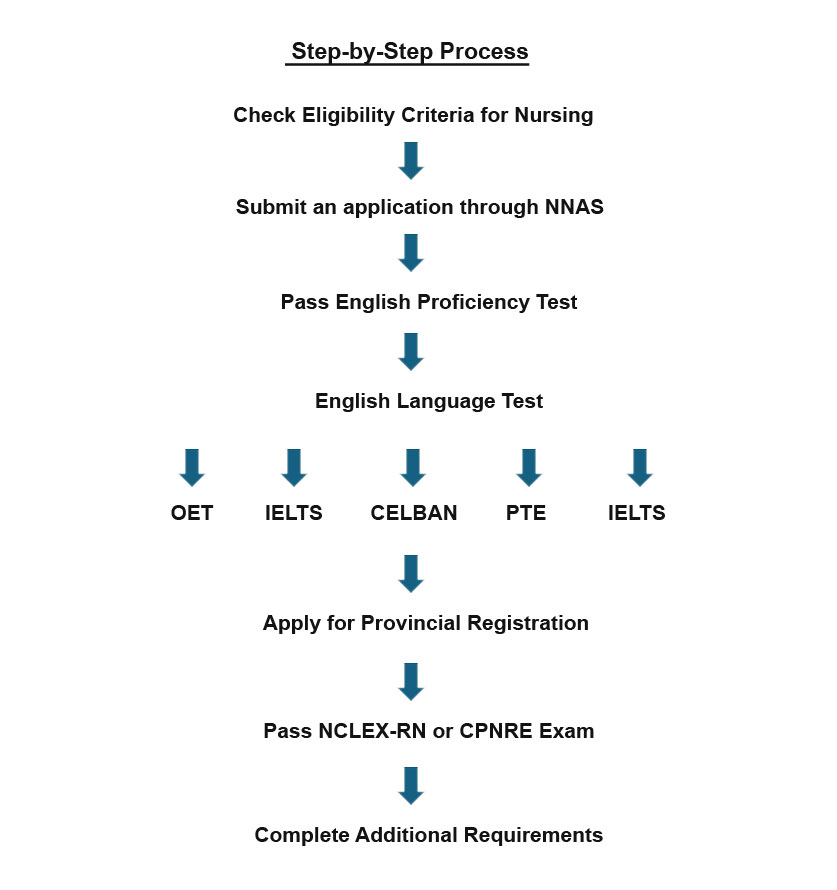
Step-by-Step: How to Become a Registered Nurse (RN) in Alberta
Step 1: Confirm Your Eligibility and Gather Core Documents
Before initiating any applications, assemble documents you will repeatedly need:
-
-
- Valid passport and birth certificate.
- Evidence of name change (if applicable).
- Nursing education transcripts and course descriptions/syllabi from your nursing school in Ghana (e.g., University of Ghana, University for Development Studies, KNUST, or Nursing and Midwifery Training Colleges).
- Clinical hours breakdown by specialty (adult medical-surgical, pediatrics, maternity, mental health, community health).
- Verification of registration/licensure from the Nursing and Midwifery Council (N&MC) Ghana.
- Employment verification letters from hospitals/clinics (duties, dates, full-time/part-time).
- Police clearance certificate (Ghana) and later from countries of residence if applicable.
- English language test results if required (IELTS Academic/General or CELBAN, depending on regulator requirements).
-
Tip: Request sealed, official documents sent directly from the issuing institutions to the assessment body. Keep certified copies for your records.
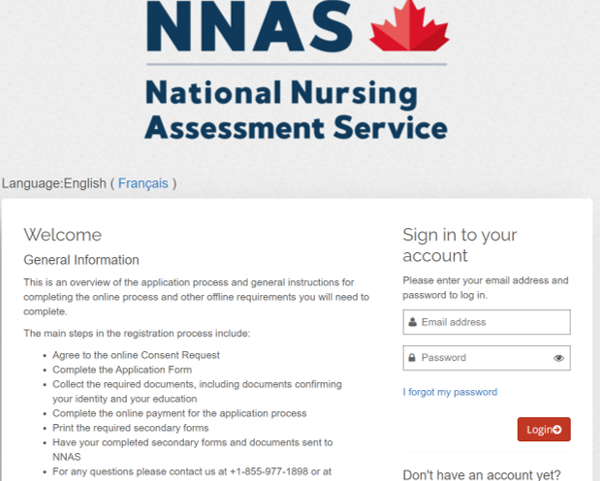
Step 2: Open an NNAS Application (National Nursing Assessment Service)
All internationally educated nurses aiming to register in Alberta must start with NNAS. NNAS verifies your education and credentials and produces an Advisory Report for the Alberta regulator.
-
-
- Create an account at the NNAS portal and choose Registered Nurse—Alberta as your target profession and province.
- Fees: Expect approximately USD 650–1,000+ depending on the number of jurisdictions and services selected.
- Document submission: Your school, regulator (N&MC Ghana), and employers must send forms directly to NNAS. You will also submit identity documents.
- Processing time: Typically 2–6 months after all documents are received.
-
NNAS will issue one of several education comparability outcomes (e.g., comparable, somewhat comparable, or not comparable). This is not a license—only a preliminary assessment sent to CRNA.
Step 3: Apply to the College of Registered Nurses of Alberta (CRNA)
After NNAS issues your Advisory Report, apply to CRNA for assessment and registration eligibility.
- Create a CRNA account and submit the application for internationally educated nurses.
- Fees: Expect CAD 500–1,000+ over the course of assessment and registration.
- What CRNA reviews: NNAS report, education, practice hours, English language proficiency, jurisprudence knowledge, and potential competency gaps.
Outcomes typically fall into one of these categories:
- Eligible to write NCLEX-RN (and complete other requirements, such as jurisprudence and background checks).
- Bridging or competency assessment required (e.g., registered nurse bridging or a competency assessment like an IENCAP-equivalent or a substantially equivalent competency assessment).
- Recommendation to pursue LPN pathway if gaps are significant and RN equivalency is not demonstrated at this time.
Step 4: Demonstrate English Language Proficiency (If Required)
CRNA requires evidence of English proficiency unless you meet an exemption. Common options:
- IELTS Academic or General with minimum band scores as specified by CRNA.
- CELBAN (Canadian English Language Benchmark Assessment for Nurses).
Scores and valid test types can change; always verify current requirements on the CRNA website. If you completed your nursing education in an English-instruction program and meet specified criteria, you may receive an exemption.
Step 5: Complete Alberta Jurisprudence and Other Regulatory Requirements
Most applicants must complete a jurisprudence module and exam covering ethics, standards, and Alberta-specific legislation. You may also need:
- Criminal record and vulnerable sector checks (once you’re in Canada).
- Evidence of good character and references.
- Proof of current CPR/Basic Life Support.
- Professional liability protection (often through employer or nursing association upon employment).
Step 6: Prepare for and Pass the NCLEX-RN
The NCLEX-RN is the national exam for RNs in Canada (except Quebec). You’ll register with Pearson VUE after CRNA grants eligibility. Key points:
- Format: Computer-adaptive test, 5-hour maximum, 85–150 questions (as per current NCLEX rules).
- Content areas: Safe and effective care, health promotion, psychosocial integrity, physiological integrity.
- Resources: UWorld, Saunders, NCLEX Mastery, LaCharity for prioritization, official NCLEX test plan.
- Location: Test centers exist globally; many candidates take it in Canada after arrival or in neighboring countries with test centers.
Action tip: Build a 6–12 week study plan with daily practice questions and weekly full-length sessions. Track weak areas and adjust.
Step 7: Complete Competency Assessments or Bridging (If Assigned)
If CRNA identifies gaps, you may be directed to a Substantially Equivalent Competence (SEC)-type assessment or a bridging program. Alberta institutions periodically offer bridging or refresher programs for IENs, which can include:
- Classroom theory to align with Canadian standards of practice.
- Clinical placements in Alberta healthcare settings.
- Preparation for NCLEX-RN and workplace integration.
Program availability changes; check CRNA and Alberta post-secondary schools such as Mount Royal University, MacEwan University, and other institutions that have historically offered IEN programs.
Step 8: Secure Provisional/Temporary Registration (If Available) and Gain Experience
Depending on CRNA’s assessment, you may be eligible for provisional registration (e.g., supervised practice) while completing final steps such as the NCLEX-RN. Provisional registration helps you gain Canadian experience and income. Follow employer and CRNA conditions carefully (practice only within authorized scope).
Step 9: Obtain Full RN Registration and Practice Permit
After you satisfy all requirements (education/competency, English, jurisprudence, NCLEX-RN, background checks, fees), CRNA issues your RN practice permit. You’ll renew annually, complete continuing competence requirements, and maintain good standing.
Alternative Pathway: Become an LPN in Alberta First
Some Ghanaian nurses choose to register as an LPN with the College of Licensed Practical Nurses of Alberta (CLPNA) as a faster route to the workforce, then later bridge to RN.
- Assessment: You may still start with NNAS, choosing the LPN pathway.
- Exam: The REx-PN is the Canadian exam for practical nurses in many provinces.
- Pros: Faster employment, Canadian experience, income while you plan RN bridging.
- Cons: Different scope of practice and salary; additional steps later to bridge to RN.
Immigration Pathways to Alberta for Ghanaian Nurses
You will need the right to live and work in Canada. Common options include:
1) Express Entry (Federal Skilled Worker or Canadian Experience Class)
- Create a profile under Express Entry. Points depend on age, education, experience, English/French, and adaptability.
- Having a job offer or provincial nomination can significantly boost your score.
2) Alberta Advantage Immigration Program (AAIP)
- The AAIP offers streams aligned with provincial labor needs, including healthcare.
- Sub-streams may target candidates with Alberta job offers or those already in Alberta on a work permit.
3) Work Permit via Employer Sponsorship
- If you secure an Alberta employer willing to support a work permit, you may enter Canada and complete licensing steps concurrently.
- Some roles may require a Labour Market Impact Assessment (LMIA); others may be LMIA-exempt under international agreements or public policies.
Important: Immigration and licensing are separate. You can start the licensing process from Ghana, but you need immigration authorization (e.g., work permit, PR, or study permit for bridging programs) to work or study in Alberta.
Costs, Timelines, and Planning Your Budget
Costs vary by case, but a realistic planning range for RN licensure (excluding relocation) can be:
- NNAS: USD 650–1,000+
- CRNA application/assessment: CAD 500–1,000+
- English test (IELTS/CELBAN): CAD 300–400 per attempt
- NCLEX-RN registration and exam: Approx. USD 200–400 plus scheduling fees
- Bridging/competency assessment: CAD 2,000–15,000+ depending on program length
- Police checks, medicals, notarization, courier: CAD 200–600+
Timeline estimate:
- Document collection in Ghana: 1–3 months
- NNAS evaluation: 2–6 months after all documents received
- CRNA assessment: 1–4 months
- Exams/bridging: 2–12 months depending on requirements
Many candidates complete the process in 9–24 months, depending on document readiness, assessment outcomes, and exam performance.
English Language Proficiency: What Ghanaian Nurses Should Know
Ghana is an English-speaking country, but proof of language proficiency may still be required. Review CRNA’s current rules regarding:
- Acceptance of education in English as proof
- Accepted tests and minimum scores (IELTS or CELBAN)
- Validity periods for scores
Tip: If you need IELTS, aim above the minimum to support both licensing and immigration (Express Entry points improve with higher language scores).
Clinical Competencies and Bridging Expectations
Canadian RN practice emphasizes critical thinking, patient safety, interprofessional collaboration, documentation standards, cultural humility, and evidence-based practice. If assigned bridging, expect coursework and clinical placements that focus on:
- Medication safety and calculations
- Communication and documentation (SBAR, electronic charting)
- Canadian health system structure and public health policies
- Professional standards, ethics, and patient-centered care
- Acute care, community health, and mental health competencies
Finding Jobs in Alberta: Strategies for Ghanaian Nurses
Once you have provisional or full registration, use these strategies:
- Target major employers: Alberta Health Services (AHS), Covenant Health, and private long-term care providers.
- Geography matters: Consider roles in Calgary, Edmonton, Red Deer, Grande Prairie, Lethbridge, Fort McMurray, and rural/remote areas where demand is high.
- Optimize your resume: Canadian-style format, quantifiable achievements, and clear clinical skills (IV therapy, wound care, telemetry, dialysis).
- Network: Join local and online IEN groups, LinkedIn nursing communities, and attend virtual job fairs.
- Be flexible initially: Medical-surgical units, long-term care, and rural placements can be strong entry points.
Case Study: Ama’s Journey from Accra to Alberta RN
Ama, a BSc Nursing graduate from Ghana with three years of medical-surgical experience, began NNAS in January. Her documents reached NNAS by March, and she received a “somewhat comparable” report in June. CRNA reviewed her file and requested a competency assessment. She completed it in September and was assigned a short bridging program, which she completed by December. She passed IELTS in October and the NCLEX-RN in February. By March the following year, she held an RN practice permit and joined a medical unit in Calgary. Total time: ~14 months.
Key takeaway: With organized documents and steady progress, a 12–18 month timeline is achievable.
Common Pitfalls and How to Avoid Them
- Incomplete documents: Delays happen when schools or regulators don’t send sealed forms. Follow up proactively and use trackable courier services if allowed.
- Outdated syllabi: Provide detailed course descriptions and clinical hour breakdowns to support equivalency.
- Underestimating English tests: Prepare thoroughly—even fluent speakers may need practice to meet score thresholds.
- Skipping jurisprudence prep: Study Alberta standards and ethics to pass on first attempt.
- Financial under-planning: Budget for multiple exam attempts, potential bridging, and living costs during study.
Comparing RN vs. LPN Pathways for Ghanaian Nurses
| Aspect | RN (CRNA) | LPN (CLPNA) |
|---|---|---|
| Scope of Practice | Wider scope; leadership and complex care | Focused scope; foundational nursing care |
| Exam | NCLEX-RN | REx-PN |
| Time to Licensure | Typically longer |